
Top-Down vs. Bottom-Up Therapy. What’s the Difference and Why It Matters
Not all therapy works the same way. Understanding the difference between top-down and bottom-up approaches can help you choose the kind of support that leads to meaningful, lasting change.
UNDERSTANDING YOURSELF
Shelley Sayle-Udall
3/28/20262 min read
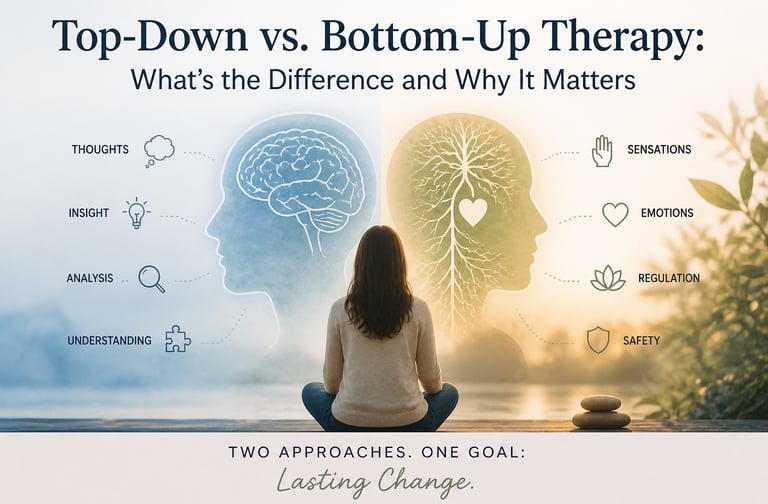
Top-Down vs. Bottom-Up Therapy: What’s the Difference and Why It Matters
When people think about therapy, they often imagine talking through thoughts, reflecting on experiences, and trying to make sense of what’s happening in their lives. While this is part of therapy, it’s not the whole picture.
There are different ways therapy works - and understanding the difference between top-down and bottom-up approaches can help explain why some methods create deeper and more lasting change.
What Is Top-Down Therapy?
Top-down therapy focuses on the thinking part of the brain - helping you understand your thoughts, beliefs, and patterns. This approach often includes:
identifying and challenging unhelpful thoughts
gaining insight into behaviour patterns
reflecting on past experiences
developing new ways of thinking
Top-down approaches can be very helpful for:
building awareness
improving problem-solving
understanding why you feel the way you do
Many traditional talk therapies fall into this category.
Where Top-Down Therapy Can Feel Limited
Insight is powerful - but sometimes people find that while they understand what’s happening - still feel stuck. You might think:
“I know why I feel this way, but I can’t change it”
“I understand my patterns, but I still react the same way”
This happens because not all responses are driven by conscious thought.
What Is Bottom-Up Therapy?
Bottom-up therapy works with the body and nervous system, not just thoughts. Instead of starting with “What are you thinking?”, it explores “What is your body experiencing?” This approach focuses on:
how your body responds to stress
emotional and physiological reactions
nervous system regulation
patterns that happen automatically
Bottom-up approaches recognize that many responses - especially related to stress, anxiety, or trauma - happen below conscious awareness.
Why the Body Matters
When you’ve experienced stress, overwhelm, or trauma, your nervous system adapts to protect you. This can lead to:
feeling constantly on edge
shutting down or withdrawing
strong emotional reactions
difficulty calming down
These are not simply “thinking problems” - they are body-based responses.
Why Top-Down Alone Isn’t Always Enough
If a response is happening in the nervous system, thinking differently doesn’t always change it. This is why people can:
understand their anxiety
know their triggers
try to think differently
…and still feel overwhelmed.
What Bottom-Up Therapy Adds
Bottom-up approaches help you:
become aware of how your body responds
develop ways to feel more grounded
regulate emotional reactions
shift patterns over time
This creates change that feels more natural, sustainable and less effortful.
The Most Effective Therapy Uses Both
It’s not about choosing one or the other. The most effective therapy often combines top-down (understanding) WITH bottom-up (regulation and experience)
Together, this allows you to:
understand your patterns
feel more in control of your responses
create lasting change
A More Complete Approach to Change
Therapy that integrates both approaches recognizes you are not just your thoughts and you are also your body, emotions, and experiences. When all of these are supported, change becomes more possible.
You Don’t Have to Stay Stuck
If you’ve been trying to understand yourself but still feel stuck, it may not be about trying harder - it may be about using a different approach.
You Don’t Have to Figure This Out Alone
If you’re feeling unsure where to start, that’s okay 👉 Book a Free Consultation
We can talk through what’s going on and explore what kind of support would be most helpful for you and your child.
Related Services
✔ Child Anxiety & Emotional Support ✔ Parenting Support ✔ Teen Therapy
✔ Trauma-Informed Therapy ✔ Adult Anxiety Therapy ✔ Relationship & Family Therapy
Explore Psychotherapy Services here
Book a FREE consultation